
Beyond Fishmeal!
Insect Protein as a Performance Driven Solution
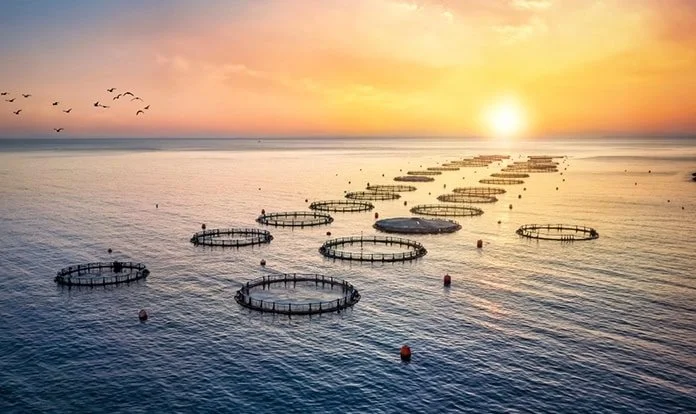
Europe’s aquafeed transformation is no longer incremental. It is structural. As fishmeal inclusion rates in salmonids have declined from historical levels above 40% to often below 10–15%, the industry has reduced pressure on wild fisheries, yet simultaneously increased reliance on plant proteins with their own land-use and deforestation implications. This is precisely where we must think beyond substitution and move toward systemic redesign.
In my view, insect protein, particularly yellow mealworm, represents one of the most technically robust and strategically aligned solutions for the next phase of aquaculture growth. Defatted mealworm meal typically contains 50–70% crude protein with digestibility coefficients frequently exceeding 85–90% in trout and sea bream. Essential amino acid profiles are well balanced, particularly in lysine and methionine compared to many plant proteins. Scientific trials have demonstrated successful fishmeal replacement levels of 25–50% in several species without negative impacts on growth performance, FCR, or survival rates. In many cases, FCR values remain within conventional ranges (≈1,0–1,4 in salmonids), while immune modulation and gut health parameters show additional benefits.
But beyond performance metrics, the real transformation lies in production logic. Mealworms can be reared on agricultural side-streams, converting them into high-quality protein, lipid fractions, and bioactive frass. This is not just ingredient replacement. It is circular bioeconomy in action.
If aquaculture is to expand responsibly while marine ecosystems and arable land face increasing pressure, integrating insect-derived proteins is not a niche innovation. It is a strategic inflection point for sustainable protein systems.
https://www.feedandadditive.com/aquafeed-shifts-reshape-europes-aquaculture-footprint/